Lake-effect snow does not negotiate. When the fetch over Lake Erie lines up, the flakes stack fast, sometimes two or three inches an hour, and roofs in Erie County carry that weight until something gives. The piles look picturesque in the yard light, then they bury gutters, choke valleys, and creep into attic air. If you have lived through a few Erie winters, you know the rhythm: thaw, drip, freeze, heave. Roof snow removal in Erie is not optional maintenance, it is how you keep water on the outside of your home.
What snow does to a roof in Erie
Snow is not just weight. It is a changing load that settles, absorbs rain, refreezes, and drives meltwater into places wood never signed up for. A foot of dry snow might weigh 3 to 5 pounds per square foot. A foot of wet snow or slush can push past 20 pounds per square foot. Add a glaze of ice, and the load jumps more. Most modern residential roofs are built to local codes, which consider ground snow loads in the 40 to 50 pounds per square foot range in parts of Erie County. The roof design includes slope, framing spacing, and materials, which means your structure can handle storms within a band. Repeated cycles, uneven loading, and ice damming are the variables that make failures more likely.
Ice dams form because the roof warms patchily. Heat from the house melts snow from below, the water flows down the shingles until it hits a cold overhang, then it refreezes and builds a ridge. More meltwater backs up behind that ridge and noses under shingles, then into sheathing. From there, gravity takes it into soffits, wall cavities, and ceiling drywall. You may not see it until a stain blossoms or paint peels near an exterior corner. On low slopes and in valleys, the problem compounds. The snow sits longer, the sun is less effective, and the meltwater path stays shaded.
Commercial roofs in Erie have a different geometry but similar risks. Flat and low-slope membranes can carry a surprising amount of ponded water when roof drains freeze or scuppers clog with snow. The combination of snow, slush, and water adds dynamic loads that shift as daytime sun loosens the surface. Mechanical units create warm zones that melt snow around them, then that water crawls across cold membrane and refreezes at the perimeter. A property manager never wants to get the 3 a.m. call about a leak over a server room.
When to remove snow, and when to wait
There is no one number that fits every roof. Context matters more than an inch count. A shallow 3:12 pitch with a north-facing exposure and a history of ice dams gets attention earlier than a steep 10:12 south-facing roof with dark shingles. A heavy snowfall followed by sleet and rain is the danger combination. The snowpack densifies, often doubling its weight in a day, and ice bond increases with the roof surface.
From the field, two cues stand out. First, watch the gutters and downspouts. If icicles are forming in layers and creeping up toward the first course of shingles, you have active refreezing at the eaves. Second, look at doors and ceilings under exterior walls. If a top door rubs the jamb after a storm, or if a faint brown halo appears on a ceiling near a wall, water has found its way past the roof covering. That is the moment for roof snow removal, not when a long-term forecast promises a thaw.
For commercial snow removal, decisions lean on expected roof load and risk tolerance. A plowable snow in the lot might be a tolerable load on a roof if temperatures will stay cold and no rain is forecast. Add a warm spell and wet snow, and removal moves to the top of the list. Facility managers often coordinate with a licensed and insured snow company to set thresholds based on area, roof type, and occupancy below.

Methods that work in Erie’s conditions
The goal is to relieve load and break the ice dam cycle without damaging the roof. On residential snow removal in Erie PA, the tool of choice is the long-handled roof rake. The trick is not to scrape. You want to pull down loose snow and carve channels through the packed layer so that any meltwater has a path. Start a few feet above the eave and work across the edge so the ice dam area has clearance. If the snow is deep, take it in lifts. Pulling an entire heavy slab can torque the rake and rip shingles, especially in older roofs.
On steep slopes, specialized crews use harnesses and roof shoes, but homeowners should not. The combination of icy shingles, hidden vents, and buried skylight edges is a fall recipe. A common mistake is climbing onto a roof with a shovel and chopping the ice dam. That chips shingles and loosens granules. It also creates a serrated edge that catches the next melt. More effective is steaming, a method professionals use to cut channels through ice without thermal shock to shingles. Steamers use high-temperature, low-pressure vapor to slice and lift the dam. In Erie’s deeper cold snaps, this method stays effective when chemical deicers lag.
On commercial snow removal Erie PA, crews use snow blowers with non-scratching skids and plastic blades to reduce membrane scuffing. They stage the work in grids to manage load redistribution and avoid piling snow in one zone. Roof edges and parapets are weak points, so the team leaves a safety buffer near the perimeter to prevent shear damage and fence strikes. Drains and scuppers get cleared first and last so they remain open as the sun works.
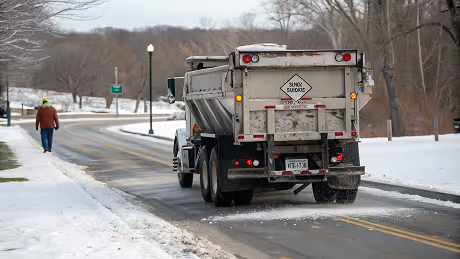
Gutters deserve separate attention. Heated cables can help if installed correctly with a proper breaker and GFCI. They do not remove the root cause, which is heat loss through the roof deck and inadequate venting, but they can buy time during a heavy pattern. Clearing gutter tops after each storm reduces the risk of an ice lock that amplifies damming. In older homes with narrow soffits and minimal insulation, a small improvement like adding a few balanced soffit vents can improve airflow enough to cut down ice formation along the eave.
The Erie pattern matters
A typical Erie winter does not give you a single heavy snow you can plan around. Lake-effect bands deliver six inches, then three, then another ten, and the temperature moves between the teens and low thirties. That seesaw encourages ice. It also makes driveway snow removal and erie pa snow plowing a constant chore. Those same patterns govern roof strategy. It is rarely about one dramatic clearing, more often a series of light mitigations after each event.
Years back, I watched a neighbor on the west side get into trouble after a week like that. He shrugged off the first two snows, then called a buddy with a shovel when the third came. They got up there, chopped the visible ice ridge, and left. Two days later we had a warm rain. The chopped edge acted like a serrated dam. Water rode up the jagged ice, slipped under the loosened shingles, and it found a seam above the living room. The ceiling sagged. He ended up paying more for interior restoration than a season of safe roof snow removal Erie would have cost through a snow plow service Erie County already working his street.
Safety is not negotiable
Everyone wants the roof clear fast, but a fall on an icy driveway will ruin a winter. Keep to the ground as much as possible. Use a roof rake with a telescoping handle long enough to reach the first 6 to 10 feet of roof. That is the zone where ice dams form, and clearing it is often enough to keep water moving. Do not stand directly beneath the eave while you pull. Wet snow and ice slabs come down with weight and surprise. Give the ladder space, tie it off, and have a spotter if you must climb to the first level to extend your reach.
If you hire, ask for a licensed and insured snow company. That phrase is not a formality. It means the crew has coverage if they slip or if a mistake damages shingles or gutters. It also signals that the company has invested in training and appropriate gear. A reputable outfit will answer questions about methods, provide references, and schedule based on hazard, not just convenience. For example, a company handling commercial snow removal should have a plan for flagged rooftop hazards like skylights, conduits, and gas lines, and should carry harness systems and fall protection compliant with OSHA standards.
How to choose a partner in Erie County
The marketplace fills fast after the first big storm. If you want reliable snow removal Erie PA for roofs, driveways, and lots, do some work before the lake turns on. Evaluate their coverage area to be sure they service your neighborhood, not just main corridors. Ask how they handle communications during lake-effect events, when timing slips constantly. A good snow plow service Erie County will use route software, but more importantly, they will set expectations honestly about response times during ongoing bands.
Ask about roof-specific experience. Plenty of residential snow removal companies handle driveways well, then wreck shingles on their first roof because they transfer ground habits to a fragile surface. The company should be able to explain their approach to roof snow removal Erie, including when they choose rakes, when they send a fall-protected crew, and when they recommend steaming. They should also explain what they will not do, such as chipping ice or using rock salt on shingles.
A word on pricing. You will see per-visit, per-inch, and seasonal contracts. For roofs, per-visit is common because frequency varies widely. Driveway snow removal often falls under seasonal contracts with clear trigger depths, usually 2 inches. Commercial contracts might include tiered response times with penalties for missed windows, because retail and healthcare sites cannot afford blocked access during business hours. Bundling roof service with residential snow removal Erie PA or commercial snow removal can save coordination headaches, but only if the firm has depth to cover both well during peak storms.
What you can do today to reduce risk
A lot of roof trouble is baked in during summer. You can still make small changes in winter that pay off immediately, then plan for bigger corrections in spring. Air sealing and insulation matter more than any gadget. Warm air leaking into the attic melts snow from below, then that water refreezes at the eaves. Stop the leaks, and you cut the root of ice dams.
Here is a short checklist you can use without touching a ladder:

- In the attic, seal around electrical penetrations, bath fan housings, and the top plates of walls with foam or caulk. Even an hour of work can change the melt pattern on the roof. Verify that soffit vents are open, not buried under insulation. Baffles or chutes keep pathways clear from soffit to ridge. Make sure bath and kitchen fans vent outside, not into the attic. A single shower can inject pints of moisture that freeze into hoarfrost, then melt and drip during a warm spell. Clear ground-level outlets for downspouts and keep the last few feet of the downspout free of snow so meltwater has a path away from the foundation. Stage your roof rake and extension pole where you can reach them after a storm, not buried behind the sleds.
If you have a persistent ice dam location, you can relieve it temporarily by making channels through the snow with a roof rake. Some people use calcium chloride socks laid perpendicular to the edge. They work slowly and can stain, and they are a bandage, not a cure. The best winter tactic is consistent clearing of the first few feet above the eave after each event.
Coordinating roof and ground operations
Many homeowners think of roof snow removal and snow plowing as separate chores, but they interact. When you pull snow from the roof, it lands in a windrow along the foundation and in front of walkways. If you do that after the plow has already cleared the driveway, you will be shoveling heavy chunks twice. The sequence matters. Clear the roof snow removal erie roof edge first, then have the driveway snow removal crew make their pass. For commercial sites, the site map should flag roof dump zones so ground crews avoid pushing piles where falling snow will add to the mass or bury fire hydrants and egress points.
Timing matters too. Erie’s frequent squalls can drop an afternoon surprise. If a band sets up and dumps 8 inches before the evening commute, the right move may be a quick skim of the eaves with the rake to open a path, then a more thorough clearing the next morning. Ice hardens overnight, and the first hour of daylight with a little sun makes the top layer more cooperative. Experienced crews schedule roof work mid-morning through early afternoon when the bonds are weakest and footing is marginally better.
Old houses, new houses, and the edge cases
Erie’s housing stock is mixed. Early 20th-century homes with balloon framing and shallow eaves behave differently than newer trusses with soffit-to-ridge ventilation. In the older homes, warm air can migrate up wall cavities straight into the attic, which accelerates melt at the mid-roof. The eaves are often thinner, with less room for insulation, which keeps the overhang colder. That is a setup for ice dams even when the overall attic temperature seems reasonable. The fix is patient air sealing and creative insulation at the eaves, sometimes using high-density board cut to fit. But in winter, the practical measure is more frequent clearing of the bottom three feet of snow and a watchful eye on the first thaw after a storm.
Newer homes with cathedral ceilings can have localized hot spots where recessed lights or chases run. Even IC-rated lights can warm the roof in a small area. These show up as little melt craters after a snowfall. Those are fine on a steep south slope, but on a north slope above an unheated garage they are trouble. Snow removal strategy changes slightly. Clear a wider swath above the eave in areas with visible hot spots, and consider turning off or dimming recessed fixtures in rooms under problem zones during cold snaps.
Metal roofs shed differently. A smooth standing seam roof may never build a classic ice dam, but it can release sheets of snow and ice without warning when the sun hits. That is a hazard to anything below. Snow guards spread on the surface can control the release, but if they are undersized or spaced poorly, avalanches still happen. When raking a metal roof, use a soft edge tool, and work from the ground to lower loads gradually to prevent a large, sudden slide.
Flat commercial roofs have their own edge cases. Buried skylights are notorious trip hazards. Drifted zones near mechanical penthouses can triple the load in a small area. After a windy storm, you can find bare membrane in one quadrant and thigh-deep drifts in another. A crew that knows to probe and mark hazards before starting the blower keeps people and roofs safer. They will also sequence removal to relieve drift zones first, then carry away the displaced snow so they do not create a secondary drift by a parapet.
Communication during a storm cycle
Lake-effect storms are fickle. A band can park over Millcreek for six hours while Harborcreek gets flurries, then reverse during the night. The best residential and commercial snow removal companies build their communication around that uncertainty. You should get updates that acknowledge reality, not scripted estimates. A simple text that the crew expects to hit your street between noon and three, with a note that a band over the airport may push that later, beats silence or false certainty. If you run a site that cannot tolerate iceslicks, ask your provider how they stage equipment and staff when the radar lights up. A company that relies on a single truck and a shovel will be outmatched during the week when lake-effect rolls through every day.
If you self-manage, use the tools available. Radar estimates, National Weather Service discussion notes, and ground observations matter more than the headline forecast. When the discussion mentions a saturated dendritic growth zone and a long fetch, you know the bands will stack. That is the day to stage the rake, check the attic hatch, and push your driveway clearing earlier to leave time to open the eaves.
What it costs to do it right
Homeowners often ask what a season of roof snow management runs in Erie. The honest answer is that it varies by roof size, slope, access, and winter behavior. For a typical 1,600 to 2,000 square foot ranch with straightforward access, a single roof-edge clearing might run similar to a couple of driveway plows, while steaming a mature ice dam costs more, sometimes as much as a full day of labor plus equipment. A seasonal agreement that includes priority visits after 6-inch events will cost more upfront but can prevent the expensive emergency call after a soaked drywall ceiling. Commercial sites budget per square foot and by response time guarantees. A grocery store with a flat roof and open hours will pay for a tighter threshold and backup crews because a roof leak over produce is immediate loss.
The less obvious cost is what you avoid. A small water intrusion at the eave can soak insulation. Wet insulation loses R-value, which melts more snow, which feeds the problem. It also grows what you do not want growing in a cavity. Drying and remediation add thousands to a spring budget. Compared to that, paying a licensed and insured snow company for targeted roof snow removal Erie during the heavy weeks is cheap insurance.
Cues that tell you what to do next
The roof talks if you listen. Thick icicles that multiply each day even when temps are steady, the faint scent of damp attic wood near a closet, a door that used to swing free now catching slightly at the top after a storm, these are early signals. So is the pattern of melt on your shingles. If you look from the street and see stripes of bare roof above insulation voids and a wide white strip at the eave, you are in the ice dam zone. The right move is to open that eave with the rake and schedule a visit to trace air leaks when the weather allows.
On commercial roofs, water around a drain that remains unfrozen while the field is white tells you the warm building below is melting snow locally and the drain is partially blocked. You will want to clear that immediately. A bowed acoustic tile in a patient corridor or a drip near a column line points you to check above for a seam or penetration.
Bringing it together for an Erie winter
The formula is simple but relentless. Keep snow loads reasonable, keep meltwater moving, do not bash your roof to do it, and coordinate with the people and tools that can help. Snow removal is more than erie pa snow plowing. It is a chain of small, timely actions that protect structure and comfort during the weeks the lake decides to send its share inland.
If you have a dependable snow plow service Erie County handling your driveway, consider adding roof attention after heavy events, especially if you have a history of ice dams. If you run a site, fold roof checks into your commercial snow removal plan so your first awareness of a problem is not a ceiling stain above a critical area. If you prefer to manage it yourself, keep the roof rake close, keep your balance on the ground, and keep an eye on those cues.
Winter here demands attention. Handle the roof piece with care and judgment, and the rest of the season gets simpler. The snow will keep coming. Your job is to give it a safe place to land, then a smart way to leave.
Turf Management Services 3645 W Lake Rd #2, Erie, PA 16505 (814) 833-8898 3RXM+96 Erie, Pennsylvania